Tuesday, 10 January 2012

Deeper Roots


I like to use time while out running to go over work, letting my mind wander around whatever subject I have to write about, giving books shape and form, sorting out order in which things should go into a chapter or a blog. This morning, while struggling with a sore medial meniscus over 5 miles I found myself (once again) wishing that I'd started running when I was much younger. Like at High school, where I'd hated the 'cross country' runs we were forced to endure along snow-capped sand dunes in mid-winter so much, that I didn't even consider running for 'fun' until I was into my late 30s.


Thinking back so far though brought me to a time in my life when I seemed to gain consciousness for the first time, or rather realisation that I was a separate entity to my family, that I was developing an 'identity'. That time I now think, was 1972 (or at least it's become 1972, if only for the purposes of this blog). As a pre-teen I'd inherited from an uncle some 78 rpm records, a lot of 1960s-released 7" 45rpm singles and a few albums, and I'd found in music (and football) a sense of elation and freedom that the rest of my life seemed intent on restricting.


In 1972 I found a host of new—to me—music that raised my spirits, and made me want to dance, sing and do anything. Especially if it meant doing something that did not involve my restrictive family. Most of my school pals, being male, white and working class like me, were into awful, pretentious, boring prog rock. I really couldn't get into it. The glam rock bands of the time, such as Sweet, Slade and the Glitterband (see above) were funny and loud, but even then I found their macho male overweight builders' physiques squashed into satin and silk hilarious and impossible to believe.


T. Rex, David Bowie and the great Alice Cooper, however, were different. They all displayed acres of androgynous flesh, had attitude, hooks, great clothes and were unspeakably cool. The impact of Alice Cooper was particularly profound, especially because he so outraged parents and schoolteachers at the time. In 1976 Johnny Rotten and Glen Matlock would 'bond' over Alice Cooper, and Rotten got the job as singer with the Sex Pistols after miming to Cooper's "Eighteen" as it played on the jukebox in Malcolm McLaren and Vivienne Westwood's boutique. In 1972 Jean Genie, Children Of The Revolution and School's Out embedded themselves in my brain and heart.


I had my haircut like Bowie, bought some silver stack-heeled, zip-up boots and a cheesecloth shirt and made my first trip to a discotheque. Looking back, I can only wonder at my luck. In my unreliable memory of the first night at Tiffany's I tripped down the staircase onto the dance floor as the Temptations' "Papa Was A Rolling Stone" hit its groove—and stayed there for the full 11+ minutes of the album version. Next up was the O'Jays' "Backstabbers" which merged easily into Stevie Wonder's "Superstition" and then became The Meters' "Do The Dirt" before Curtis Mayfield told us all the tragic story of "Freddie's Dead".


The end of that first night at the disco (or perhaps not) saw me slow-dance with someone whose name I can't recall, but whose presence remains pressed against my psyche. Harold Melvin & The Blue Notes' "If You Don't Know Me By Now" featuring the inimitable Teddy Pendergrass, "I'm Still In Love With You" by Al Green and the perennial floor-filling, last-dance hit, "Me & Mrs Jones" by Billy Paul made up an unholy trinity of sensual smooch songs to which countless teenagers in 1972 discovered their  sexual orientation.


Other unreliable memories of that year include learning how to really dance to the sound of James Brown's "Get On The Good Foot"(this is a great version, by the way), War's "City, Country, City" and, surprisingly perhaps, Boz Scaggs' "Dinah Flo". 'Surprising' because at the time Scaggs was barely known in the UK except as the former guitarist with the Steve Miller Band, and therefor thought to be a hippie, rock-oriented, AOR artist. Yet "Dinah Flo", like his later "Lowdown" (1976) was a disco hit, at least where I learned to dance, it was.


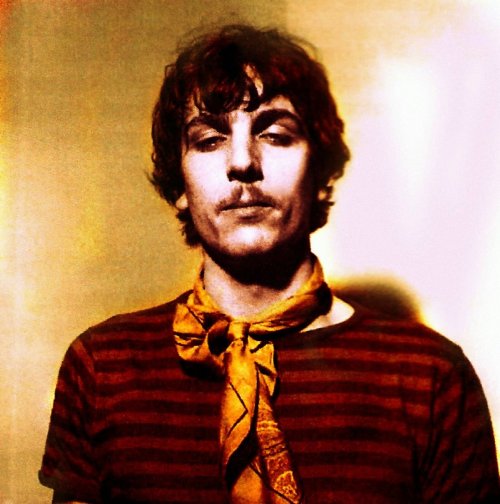
That first night at Tiffany's (wishing I looked as cool as this guy above) led to regular Friday and Saturday night visits and the beginning of a long-lasting romance with disco. It's probably where I first damaged my medial meniscus.

Wednesday, 4 January 2012

Goin' Back To My Roots

On Christmas Day I was lucky enough to find a free ebook in my virtual stocking. The inventive folk at Essential Works (who have created all of my books in the past five years) sent me and a few thousand others a link where we could download a copy of Rocket 88: Classic Singles. It's a quirky thing, being an appreciation of the single record release, a now pretty much redundant physical format, but which, between 1949 and 1999 (the book argues) helped to shape the musical tastes, youth cults and experiences of generations of people who grew up in an era when you had to go looking for new, different forms of music because they didn't come looking for you.


Some of the choices of singles of 'the year' are wilfully perverse—"My Boy Lollipop" beats out "Hard Day's Night" in 1964, for instance—but the inclusion of records which were not considered mainstream and didn't trouble the official charts compilers of the day adds to the depth and breadth of the revisionist view of pop music history. Such a view is often, increasingly, missing when pop show 'researchers' put together simplistic programmes detailing at how quaint the 20th century was. I once spent more than an hour trying to explain to a 'researcher' that, while I had been a punk in 1976, like all punks of the first wave, I didn't have a mohican, didn't wear Westwood and still danced my ass off at discos to great dance music. She just couldn't get it that different musical and social cults co-existed and didn't neatly simply follow on from one another. I didn't even try to explain why Teddy Boys razored Rotten or why soul boys with wedge haircuts and shoes like dead pigs' noses stood side-by-side with punks during physical confrontations with moronic leather-jacketed rockers.


Reading the entries in R88: Classic Singles reminded me of how diverse, enterprising and inventive the music scene was all those years ago. This being the first blog of a new year, I thought I'd begin in a manner that befits the world in 2012; by looking backwards. Sitting in an England currently suffering under the yoke of a repressive, divisive, right-wing-dominated, public-school-educated political elite with as much understanding of, and care for, any class other than their own, naturally had me casting my mind back thirty years. How could it not? Hearing a prominent US senator quoting Thatcher recently in his dismissal of our NHS as being the reason that she couldn't make Britain as 'great' as Reagan had the US, had me spluttering with rage just as I used to, constantly, in the days when she sacrificed thousands of lives in the Falklands in order to get re-elected.


So, inspired by R88, I'd like to guide you through some of my personal favourite singles of random years past, beginning with 1982, because it was thirty years ago today that I said goodbye to the Morgan family home for good, and lit out for the territory. Having learned to drive as soon as I was able, I promptly lost my license for six months because of the unroadworthy state of my beloved 1967-registered Triumph Spitfire MkII. That had been in 1981. A year later I was busy compiling cassette tapes for the in-car stereo of a slightly more road-worthy Opel Kadett and bombing around with sounds blasting out of a permanently wound-down window (it was broken). While my tapes consisted of a lot of old material, from the'60s on, I also added a lot of newly released singles to them.


Having been a fan since day one, The Clash's "Rock The Casbah" was a natural tape opener, particularly in it's dance mix version ("Mustapha Dance"). Alone among their peers, The Clash had experimented with soul and dance music as well as reggae, and had given support slots on their many tours to a lot of musicians from different backgrounds, including Country singer Joe Ely, proto-rocker Bo Diddley and in 1981, the then emerging hip-hopper Grandmaster Flash (and the Treacherous Three) at Bond's Casino in New York.


With the Furious Five, Grandmaster Flash's "The Message" was a game-changing release in 1982. It was an enormous dance hit, brought rapping into the mainstream for the first time proper and while it's arrest-section mimicked Stevie Wonder's "Living For The City", the return of a political message to urban music was quickly taken up by a new wave of emerging artists—Public Enemy got together in 1982.


Similarly political and just as funky, The Gang Of Four's "I Love A Man In Uniform" saw the agit-prop punk-funkers get as close to sounding like Chic as guitarist Andy Gill could get them. They never troubled the pop charts with any single releases although this and 1979's "At Home He's A Tourist" came close. "I Love A Man" did make #27 on the US Dance charts. In the wake of the UK punk movement, a number of Northern bands emerged from former industrial powerhouse cities that had become socially deprived wastelands, making funky dance music. One of the best was Manchester's A Certain Ratio, whose "Knife Slits Water" provided a fabulous slice of scratchy funk to incite the kind of dislocated, alienated dance moves favoured by the 1980-departed Ian Curtis of Joy Division. ACR's use of horns where other bands preferred guitars was a trend then becoming a rule of dance.


Pigbag's James Brown-tribute, "Papa's Got A Brand New Pigbag" would become an enormous hit when re-released (and speeded up) in 1985, but the original release of 1982 was a slight hit on the pop charts and an enormous one in clubs. Pigbag looked much like their pop peers who appeared on TV music shows of 1982, even if they sounded unlike anything else. Their embracing the pop ethic was something frowned upon by 'serious' music fans, writers and even some bands who, like the pompous prog rock acts so ruffled by punk a few years earlier, eschewed pop single stardom. Although they did like the recently invented 'indie' single stardom, whereby their records appeared in charts created by and for supposedly 'independent' record labels and the stores who sold their releases. Scritti Politti first found indie fame on the daddy of the punk indie labels, Rough Trade. Their gorgeous funky-pop single of 1982, "Asylums In Jerusalem" made it into the official pop charts though (#43), and the next year Green Gartside (who was Scritti) signed to Virgin records.


Like Gartside, The Associates' Billy Mackenzie had a unique voice and vocal style. After beginning their recording career with an indie label (Fiction, home of The Cure), and releasing critically acclaimed but unsuccessful singles, The Associates signed to WEA and in 1982  scored a huge hit with the sublime synth-dance hit, "Party Fears Two". The same year a former founder member of Duran Duran, Stephen Duffy released the first version of what would become—in 1985—his biggest hit single, "Kiss Me". Duffy, one of the UK's greatest living songwriters, ingeniously uses sections of The Song of Songs set against a dance floor-filling electronic backing. The original sneer in the vocals perhaps belies the irony of his pure-pop approach to the music biz, which is why the re-recorded version is more 'up' in tone. Or perhaps his voice simply matured.


Lacking Duffy's irony, wholly embracing a pure-pop approach to music, Haircut 100's "Love Plus One" simply sails along on the warmth of a hook-laden chorus, funky backing and laid-back vocals. The band at least had the wit to look dumb in the accompanying video. In contrast, one of the bet live acts I saw in 1982 (or since, in fact) Kid Creole And The Coconuts look smart, funny and sassy in the video for their "Annie, I'm Not Your Daddy" single. The extended mix is a great dance record, and rivalled only by the Weather Girls' "It's Raining Men" that year for wit and funk. You gotta love the Coconuts' backing vocal of 'Onna-onna-onomatopoeia'.


Finally, two records which made it on to no charts anywhere, but which were staples of my 1982 mix tape. You couldn't exactly dance to "The Fire Of Love" by The Gun Club in the same way that you simply had to dance to the other singles here, but I still find Jeffrey Lee Pierce's Elvis-inflected delivery over Ward Dotson's trashy guitar and Terry Graham's splashing drums compelling and thrilling. In 1982 The Gun Club sort of made sense of Goth.


James 'Blood' Ulmer's "Jazz Is The Teacher Funk Is The Preacher" was originally released in 1980, but it was never far from my turntable for most of the following decade. A thrilling, driving mess of a mix of horns, way-wah guitar, Calvin Weston's brilliant paradiddling drums and Ulmer's strangled raw vocal, it remains one of the greatest unsung dance records of all time. It's tempting to include it on any subsequent list of great records from any year post-1980, although I might just slip "Are You Glad To Be In America" onto one or two instead.

Tuesday, 20 December 2011

Switched On Santa?


Why are there no really good Christmas disco recordings? There are plenty of standard Holiday songs done in a 'disco' style, all jingling hi-hat, swooping strings and soft-pedalled wah-wah guitar under breathy choral voices, but there's no killer Xmas disco floor-filler. It's not as if there was no precedent, of course. A Christmas Gift For You, released in 1963 became an instant gold standard by which all other Holidays-themed soul records would be judged. Released in mono, Spector's trademark wall-of-sound featuring a band, horns, strings and backing singers complemented by constantly jingling bells, as Ronnie Bennett (later Spector), Darlene Love and Dolores 'La La' Brooks sing like debauched angelic hosts on top of the mad genius of sound's musical Christmas tree.


Just like previous albums by Frank Sinatra, Bing Crosby and Doris Day (to name but three of many, many more), Spector's album includes standard seasonal songs, the oldest of which is Silent Night (written in 1818) credited to Phil Spector and Artists. There's also a version of White Christmas, of course, sung by Darlene Love, who gets the lead vocal on the only 'new' song, written with and for Spector by Ellie Greenwich and Jeff Barry, Christmas (Baby Please Come Home). It's this song which perhaps best epitomises why there's never been a great disco Christmas song.


Like Blane and Martin's Have Yourself A Merry Little Christmas or Irving Berlin's White Christmas, Christmas (Baby Please Come Home) is almost a blues song. Full of longing, it's a sung-through wish for something that money cannot buy; love and companionship at what is meant to be the most spiritual time of the year (at least in the Christian calendar). How does that translate to disco? It can't.


Disco is the ultimate good-time, high-energy dance music, created to get people moving and not thinking. Slow disco numbers are as much about desire and need as uptempo disco numbers, where the beat has to be felt before the emotion and substitute sex for love. Christmas is a time for reflection and contemplation, both of which are to be found in the best Christmas songs. Even those songs which engage with the rampant materialism of the 20th century, such as Santa Claus Is Coming To Town, do so with a plea to consider life and its consequences ('He knows when you've been good or bad').


Crass attempts to earn a Holiday dollar by harnessing traditional songs of the season to the hottest sound of the day fail when those involved fail to understand that the singer—or arranger—needs to embody the sense and meaning of the song in their performance. While there are thousands of people for whom the Christmas Disco album holds fond memories, that is more because of their fanciful recollection of past family gatherings than the quality of the music on the album. The recordings having been created by session musicians in Nashville and sold around the world as anonymous season songs, they have surfaced at regular intervals since the early 1970s under different titles.


The Mistletoe Christmas Band's Christmas Album of 1971 was also released the same year as Switched On Christmas by TheHit Crew as Disco Noel by The Mistletoe Christmas Band and by Mirror Image. It later appeared titled Yuletide Disco by Mirror Image, and Christmas Disco Party by DJ Santa & The Dance Squad. Whatever it's called though, it all sounds like the kind of thing best heard in a crowded mall or a working elevator. Similarly, The Salsoul Orchestra's Christmas Jollies album is mostly musical slush, with only Sleigh Bells standing out as being worth tapping a toe to.


Following Spector's lead, somewhat inevitably, Berry Gordy produced many Christmas records by his stable of soul superstars, one of the best being the Jackson 5's 1970 version of the 1847-written Up On The House Top, on which the bouncy pre-pubescent Michael manages to mix some of the zaniness of Huey 'Piano' Smith with his pure pop freshness. The Supremes' Merry Christmas album isn't exactly up to the standard of The Ronettes seasonal offerings, but Diana Ross' voice has the right edge of longing and heartbreak in it to make the slower numbers work.


While there ain't no good disco songs worth adding to a Christmas playlist, there are still plenty of decent recordings worth spinning which will get people up cutting a rug—or crying a river. James Brown's Santa Claus Go Straight To The Ghetto, Otis Redding's Merry Christmas Baby, R Kelly's Merry Christmas, Stevie Wonder's That's What Christmas Means To Me, Marvin Gaye's (live) Christmas Song, Ike & Tina Turner's Merry Christmas Baby (or the Etta James version) and the definitive version of This Christmas by The Whispers all do it for the Morgan household.

Merry Christmas, wherever you are.

Monday, 12 December 2011

Frank and Gaga


Although he's no longer with us, Frank Sinatra (who would have celebrated his 96th birthday today, December 12) still casts a long shadow over the world of popular song. Although it's been 13 years since he passed, the man who had teenagers screaming at him a decade before Elvis (and two before the Beatles) continues to sell millions of CDs, capturing millions of views on youtube and prompting cores of imitators to try out versions of his back catalogue. Consider that Rod Stewart's last four albums, The Great American SongbookI-IV, have been his best-selling releases since the early 1970s, and they include almost solely songs made familiar by Frank. At the end of last month the rumours of Martin Scorcese's long mooted Sinatra biopic about to shoot resurfaced, with Di Caprio rumoured to be playing Frank. Having already made films about Dylan, a Beatle (George Harrison), the Stones and a history of sorts of the Blues, the Goodfellas, Casino and Gangs of New York director is apparently ready to begin retelling the life of the 20th century's most compelling and interesting performer.


Meanwhile, in imitation of Sinatra's Duets album of 1993, Tony Bennett released Duets in 2006, and just as Sinatra issued Duets II (1994), so Tony has issued his Duets II, on September 20 last. Like the first Sinatra release—which was universally slammed by critics at the time of release—Bennett's new album opens with a version of The Lady Is A Tramp. Lady Gaga's contribution to the song makes it undoubtedly the highlight of the album, and suggests that she and Frank might have tackled that, or any other song, brilliantly together. Her performance on the Bennett version uses vocal twitches and comic exaggerations ("Oimins and poils") that were first introduced into performances of classic American songs by Frank. Tony has always been a fine, strong vocalist, but he's always been strictly formal, and made his name as a belter rather than a song stylist—a term almost invented for Sinatra (the original version of the song, in Pal Joey, can be seen here).


In the accompanying promo film for Lady Is A Tramp, Gaga is dressed and coifed like Marilyn, and seems to have been watching both Frank and Anita O'Day performing in the car on her way to the studio. In her Tom Ford 'designed' black lace dress and a green bob, Gaga lifts the song way above the pedestrian level of many of the other tracks on Bennett's Duets II.


Sinatra's choice of Luther Vandross as duettist on his version of the song reflects perhaps Frank's regard for great vocalists above the merely popular. With the marked exception of the execrable Bono, Frank's Duets album is packed with fantastic singers, among them Barbra, Aretha, Liza, Anita, Charles Aznavour and Tony Bennett. (Tony also called in Barbra for his own first Duets release as well as, bizarrely, Bono.) The inclusion of Luther on Sinatra's Lady Is A Tramp, with it's smooth, soulful tones, reminds us that throughout his career, Frank often adapted well to new musical styles, as long as the song was good enough. In 1977 he re-recorded versions of Night And Day and All Or Nothing At All in an orchestral-disco mode, with the jazz guitarist Joe Beck as producer, and they're great.


Bennett's Duets II has also earned press because it includes a last recording by Amy Winehouse, on a version of Body & Soul. The song was possibly chosen because of its association with Billie Holiday, with whom Winehouse was most often compared. The video accompanying the recording lacks the wit and fun of Gaga's, but perhaps that's to be expected. Frank's late-1950s duet with Dinah Shore  is much more fun to watch.


Frank enjoyed duetting with people throughout his career. His radio appearances in the 1940s with the incomparable Jimmy Durante are both hilarious and they swing. The Rat Pack nights are correctly regarded as being legendary and every recording is worth listening to more than once. Even when chasing a quick dollar Frank raised the standards of the pop genre. He gave daughter Nancy a huge hike in her career when he recorded a duet of Something Stupid in 1967 (earning himself another #1 hit).   Compare that though, with this, recorded the same year; Frank's TV special duet with Ella Fitzgerald on a version of the fabulous Little Anthony & The Imperials song, Goin' Out Of My Head.


Frank's duet with Ella on The Lady Is A Tramp from the same show offers us both performers still at their performing peak, despite both being middle-aged. As the song progresses they can clearly be seen getting into the groove, digging what they're doing, knowing that it's something special. There's something of that to be seen in Gaga's performance with a the decidedly old-aged Bennett on their Lady Is A Tramp, and suggests that, had timing been right, Lady Gaga and the Chairman of the Board could have made a great team.
Wednesday, 30 November 2011

Pink Floyd's Discoballs

When Pink Floyd started out in the mid-1960s they were a disco band. Or at least, they played at what passed for discos in London in 1966. The now infamous UFO Club became the scene for some of the most mind-expanding discos of the era, and the Floyd were almost the house band. The Floyd's version of Interstellar Overdrive was a guaranteed floor-filler, and unlike most of the usual dance hits of the day which usually comprised less than three minutes of hip-shaking, butt-wriggling, soft-shoe shuffling grooving, it went on and on until dancers were properly done in. Floyd's main man of the time, Syd Barrett, according to a fantastic recent book titled 'Barrett', had been grooving on old blues and R&B numbers for a while before forming the band in Cambridge.


Now, the idea of the Floyd as a disco band will doubtless annoy a lot of their more serious prog-infected fans, but given that the band had only two hit singles in their time worth mentioning, and both were disco-driven, should make even them stop and feel the groove. In 1977 a French music composer named Gabriel Yared was definitely feeling the Floyd disco groove when he arranged, co-produced  and played on Discoballs, A Tribute to Pink Floyd, crediting it to the fictional 'band' Rosebud. The cinematic reference in the name reflects Yared's real passion, which is for movie soundtrack composing. He's better known as the composer of the soundtrack score for Betty Blue and The English Patient.


Discoballs starts at the beginning of the Floyd's career with contemporary disco reworkings of Interstellar Overdrive and 'Arnold Layne', before moving onto a great version of Money from 'Dark Side Of The Moon'. Improbable as it sounds, Rosebud's version was a club hit in the US and Europe, it having benefited from the previous success of their version of Have A Cigar which had been an an even bigger dance hit.


Doubtless impressed with Yared's work on their catalogue, the Floyd adapted a disco beat to the recording of the one truly international hit single that they enjoyed in their career: Released in late 1979/early 1980, Another Brick In The Wall Part 2, taken from The Wall became an unlikely hit, and was played in discos around the world. For any doubters out there, take a look at this perfect mash-up of Brick and the Bee Gees' Stayin' Alive. Can you see the joins?


Of course, by the end of the 1970s everyone was jumping on the disco revolving ball in search of a hit, and that included some unlikely prog-rock heroes. Jannick Top, the bass player on Discoballs had spent the previous ten years working with weirdo French space-prog act Magma, for instance. The Grateful Dead took to wah-wah and hi-hat on Shakedown Street in 1978. However, perhaps the most surprising disco convert was Keith Emerson, formerly keyboard player with The Nice and ELP. Emerson was arguably one of the prime movers in the development of prog rock — take a look at him here in 1968 with The Nice (Warning: it's only 5.44 min long, but feels like 15:44).


As one third of the ludicrously pompous, over-blown and self-indulgent ELP (find your own links, I'm not going to make anyone suffer Tarkus or Brain Salad Surgery), Emerson constructed faux symphonies on his over-heating Hammond organ, and live performances by ELP went on for so long that venue owners started charging them monthly rents. If asked to nominate any prog musician who would have been a fully signed-up member of the odious 'disco sucks' movement, I would have chosen Emerson. Which makes the discovery of this all the more surprising; It's Emerson's version of the great Chicago original, I'm A Man and was released as a single taken from his soundtrack to the Sly Stallone movie, Nighthawks.


Nighthawks, which was originally going to be French Connection Part III until Gene Hackman pulled out of the project, is a nice period piece (1981), as you can tell from Sly's facial hair. There's a couple of great scenes in discos, one of which features people dancing the the Rolling Stones' Brown Sugar. This clip uses the Emerson album track, 'Nighthawking' though. But it's Emerson's I'm A Man that's the stand-out track. Watching the Chicago Transit Authority (as they were still called) perform their song live in 1969, you can hear why Emerson considered it easy to adapt for a disco treatment. Watching the Floyd perform Money live in 1973, or hearing them play Have A Cigar in 1975 isn't exactly a disco experience, though. Which makes Yared's disco vision even more remarkable.


Since Rosebud's Discoballs cast a shimmering light on the disco potential of Floyd, there have been other producers and musicians to do likewise.On Floyd: A Chillout Experience Lazy put Money into a bossa nova beat, along with several other Floyd tracks. Of course, chillout was where the Floyd went to after Syd left, and it's no surprise that acts like The Orb took inspiration from them, or that Feeling Floyd came into being; here they are making out on the Floyd's tribute to Syd, Shine On You Crazy Diamond. Not that it's anywhere near disco. However, this very fine and anonymous mix of Money, which claims to feature the voice of Sharon Stone, uses Laurence Olivier and Bob Hoskyns from Paul Hardcastle's Just For Money (plus an odd photograph) to create an oddly danceable version with extra meaning.

Monday, 12 September 2011

Is It All Over My Face?

As the summer turns to Fall and memories of loss and regret crowd in with lowering skies, shortened days and dropping temperatures, music from a past life helps to gain some kind of perspective on what has been, and may still be. Classic disco tracks have the power to be both nostalgic and strangely contemporary. Spinning vinyl versions of records bought decades ago is pure nostalgia, evoking in the feel and smell of the record instant memories of where each click, jump or stick will be, and how they were caused. Clicking on an old favourite in iTunes or Spotify has a different effect, though. Being clear, clean and compressed to a clinical EQ which works to both make it sound like it's 2011, and remind us of the thirty five years since the song first made our body groove.


Candi Staton's Young Hearts Run Free was—is—one of my favourite disco tunes. Whenever it was spun in the disco where I spent every other night during the long, hot summer of 1976, the hairs on the back of my neck would raise and my feet would move to the ever-crowded dancefloor, preferably with the then love of my life alongside me. Candi's regret-filled voice sang a warning that was undoubtedly heartfelt, but almost impossible to heed because you couldn't believe that she meant it. She was so hung up with her man that no matter how bad things were—and by all accounts things between Candi and her second husband, the blind singer Clarence Carter, were pretty bad—there was something compelling about the experience that gave her voice a timbre impossible to impersonate; the sound of pure heartbreak.


While the song was not 'written' by Candi, the experience which informs it is all hers. Songwriter and producer David B Crawford was a close friend to the singer and she'd told him all the terrible detail of her abusive relationship. In return he'd written Young Hearts for her, and it proved to be the biggest hit that either of them would enjoy.


The message of 'save yourself even if it is too late for me' added to a wave of disco songs sung (and sometimes written) by female artists who, like Candi (born 1940), had lived a life before becoming stars. Shirley Brown's Woman To Woman is structured as a phone call between a wronged wife and a mistress, and is remarkably free of threat, warning or revenge. Shirley simply wants to let her rival know, 'woman to woman' that she loves him enough to do what it takes in order to keep him.  The lack of rancour in the lyric and way it's sung keeps the song from being a masochistic submission to chauvinist repression. Not that standing by your man was a dominant trend for post-feminist disco women. Two years after Young Hearts had made her an international star, Candi had another hit which referenced that song; Victim ('of the very songs I sing'). In the 1978 number, also written by David B Crawford, she laments falling for another man who leaves her for another woman, and noting that 'if my advice is good for others/it's good to be good for me', but ending with the sentiment that 'I'm lucky if I can break these chains'. However, the self-accusatory chanting of 'victim' works as well as a reproach against depending on any man as the chorus of Young Hearts Run Free.


Also in 1978, Chaka Khan became a solo star singing Ashford and Simpson's I'm Every Woman, which while it depends on a traditional male-female sexual dependency, stridently makes the point that one woman is every woman—or should be—and all that any one man could want or need.


In October 1978 the great disco anthem for wronged women was released; I Will Survive was Gloria Gaynor's second huge international hit (after Never Can Say Goodbye in 1974), and became the one for which she is still remembered. Written by Freddie Perren who'd already created hit disco numbers for the Jackson 5, Tavares and the Sylvers, and Dino Fakaris, with whom he'd create hits for Peaches And Herb, I Will Survive takes the form of a first-person address by a women to the man who's wronged her by dumping her and turning up unannounced at her place. The chorus' assertion of self-determination and independence has unsurprisingly carried through the decades and remains as popular as it ever was.


It's surprising that the emphasis on 'love' between a woman and a man persisted in disco lyrics until well into the 1980s, since the scene was driven by lust and instant gratification. Even the great Weather Girls' smash hit It's Raining Men (1982, though written in 1979 by Pauls Jabara and Shaffer) speaks of angels arranging things so that every single girl can find her 'perfect man'. Not that the song was interpreted in a literal sense by the people who danced to the extended mixes in discos around the world.


In truth, as the new decade dawned a less romantic and more realistic lyric was being used in hardcore disco numbers. Loose Joints' fabulous Is It All Over My Face (1980, Arthur Russell and Steve D'Acquisto) is a stripped down funk workout—in it's Larry Levan remix—with minimalist lyrics sung by a foreign-sounding anonymous female (although the first version used three male voices), the main refrain of which 'Is it all over my face' is lyrically linked to 'how I love dancing'. But everyone 'knows' that the 'it' refers to something more substantial than a look, something linked to 'love' as biological matter. It's a deconstructed hymn to the sexual act, non-gender specific and physically compelling.


Is It All Over My Face lacks the emotional complexity of Young Hearts Run Free, even if contains within it the same message and perfectly captures the mood of the coming decade of materialistic desire and consumer greed.